
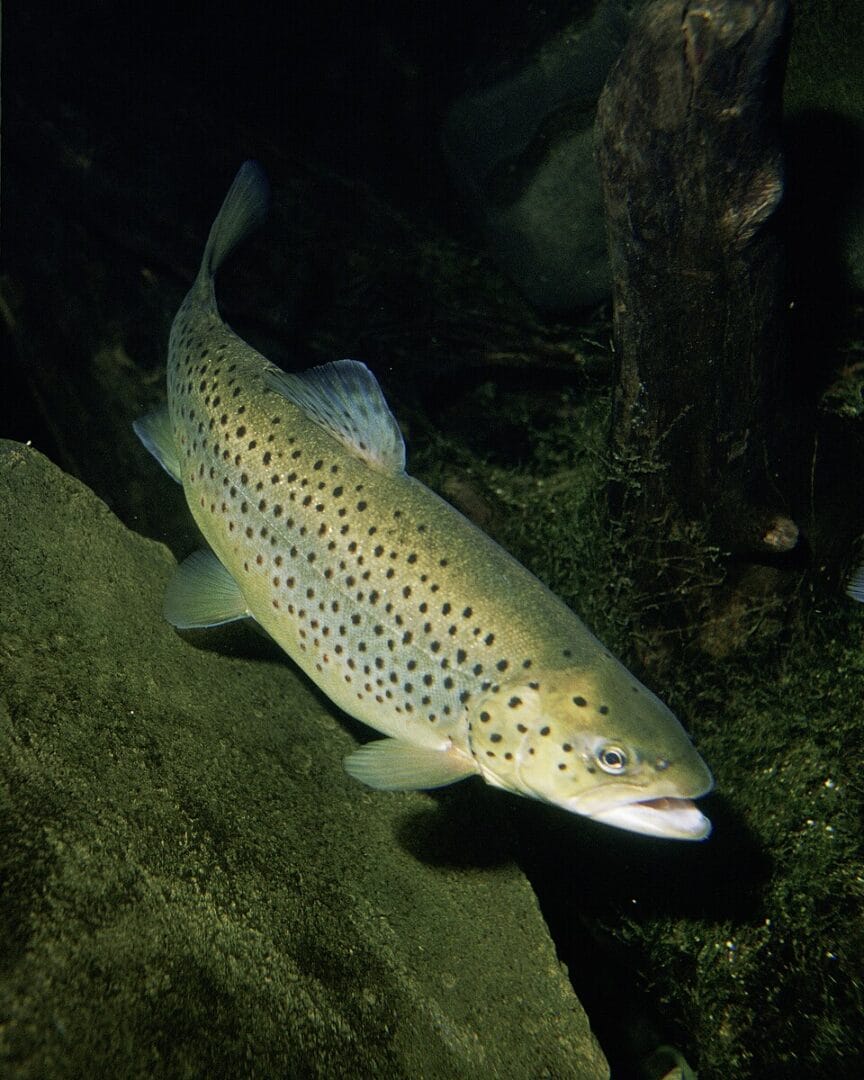
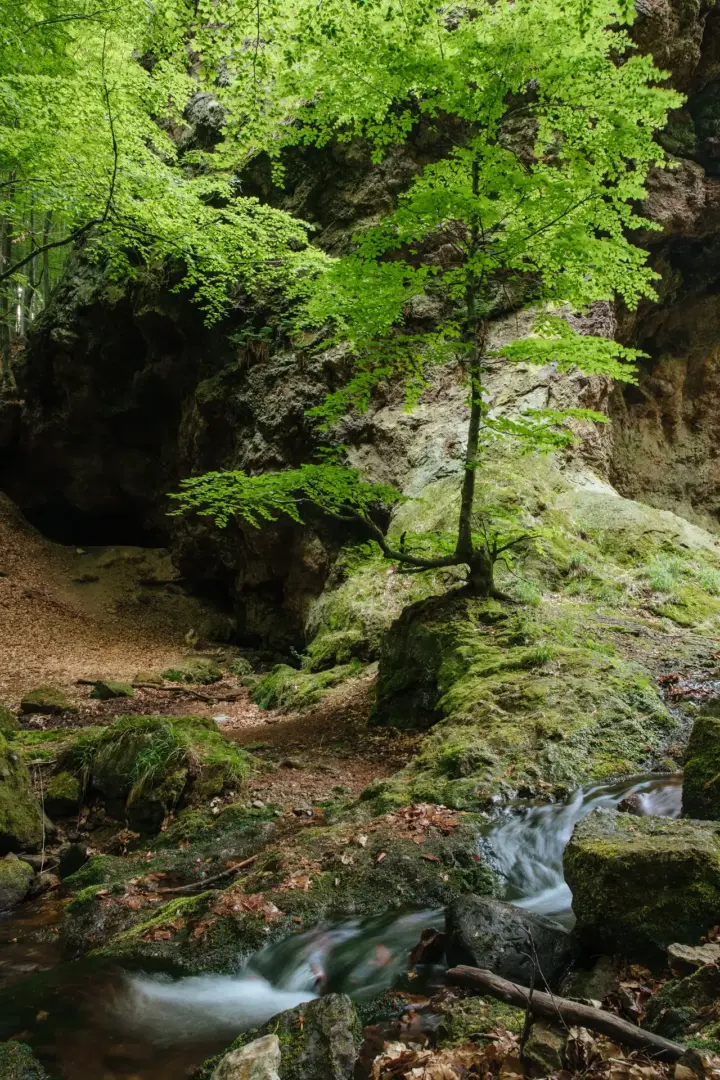
Come closer to the water. Listen to its murmur. The mountain stream seems calm, but beneath its surface, life is teeming. The clear, cold and oxygen-rich water is home to the brown trout – one of the most prized fish in the Carpathians. It lives only in clean waters, so its presence is a sign of a healthy river ecosystem.
Take a look at the stone and wooden weirs. The former were created by nature, whilst the latter were built by the Park’s staff. These are trout weirs. They help to slow the current, oxygenate the water, protect the banks from erosion and create hiding places for the fish. It is precisely these nature conservation measures that help to preserve life in the mountain streams.
If you look closely at the clear water, you might be lucky enough to spot a trout hiding amongst the rocks or standing against the current. It is a strong and hardy fish that spends its whole life on the move.
As well as trout, these swift-flowing waters are teeming with an entire underwater world, notably the European grayling – a rare and incredibly beautiful fish with a large, sail-like dorsal fin, which is listed in Ukraine’s Red Book. Another fascinating inhabitant of our river is the Carpathian lamprey – a unique jawless fish (cyclostome) which is a living fossil, a witness to bygone eras spanning hundreds and millions of years. Its larvae spend years living in the river’s muddy bed, whilst the adult itself requires exceptionally clean water and is listed in Ukraine’s Red Book.
Closely associated with the water is a large group of invertebrates – various aquatic insects, crustaceans and molluscs that inhabit streams and peat bogs.
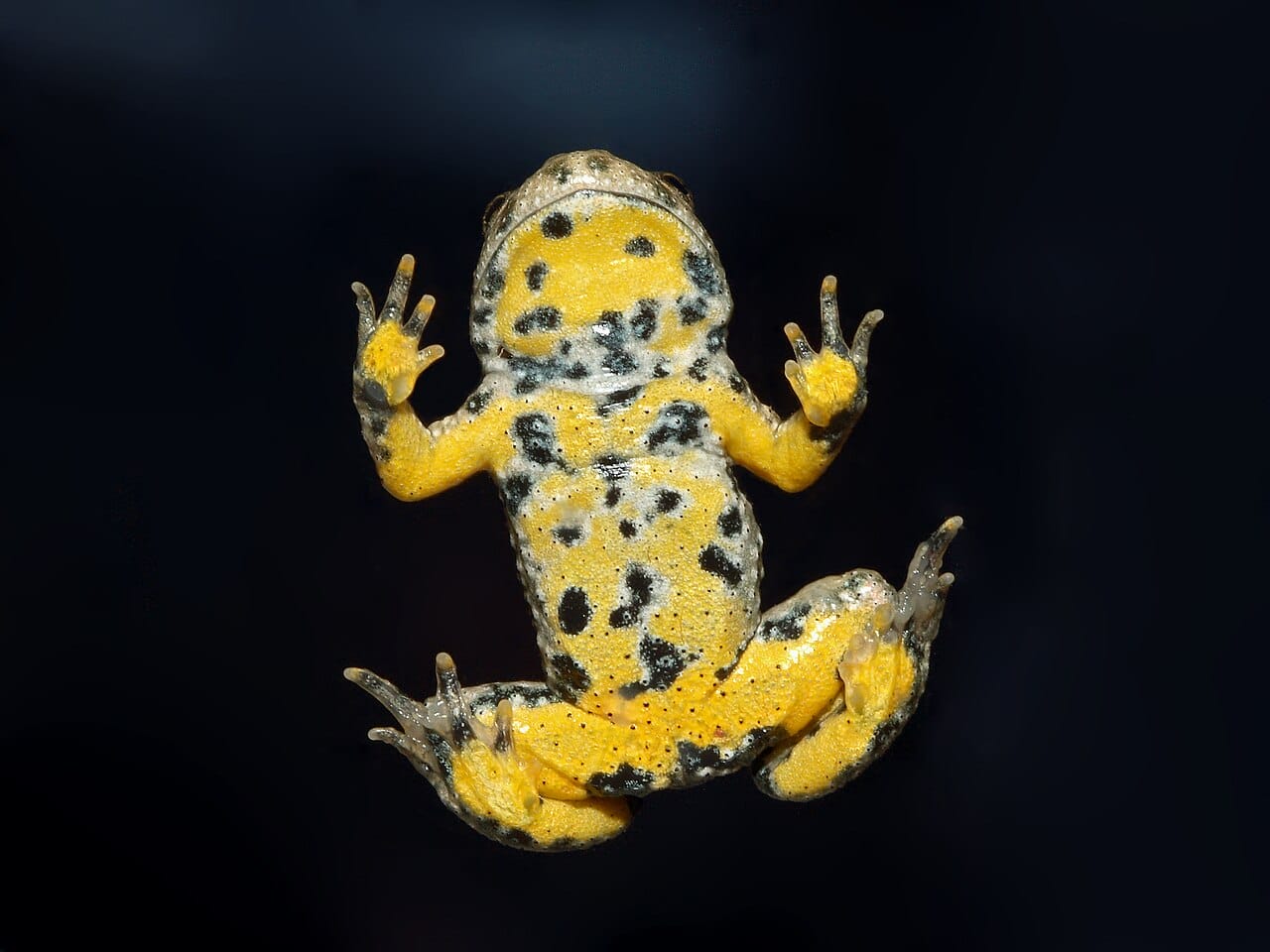
The rare yellow-bellied toad and other frog species live here. If you look down at the damp riverside stones or the moss right by the water’s edge, you may come across unique Carpathian amphibians:
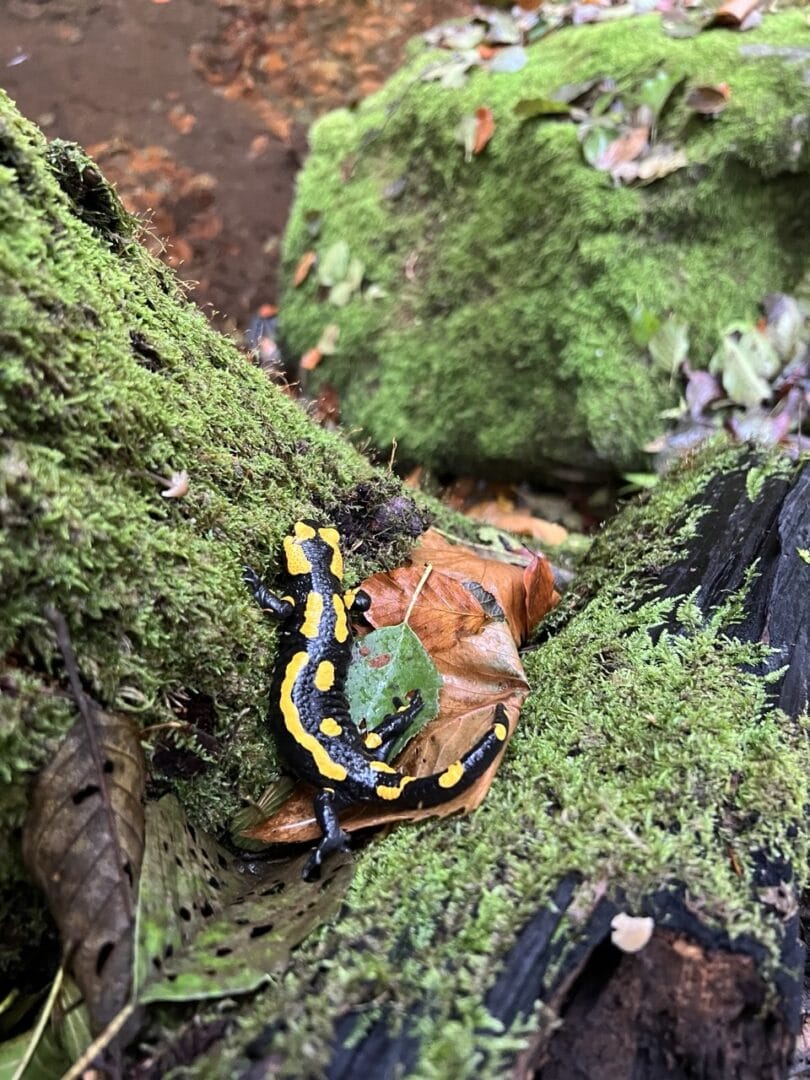
- The spotted salamander – a legendary black-and-yellow inhabitant of damp beech forests. Its larvae develop right here, in the quiet, shaded backwaters of mountain streams.
- The Carpathian newt – endemic to the Carpathians (a species found nowhere else in the world) – requires ice-cold, clear water to survive.
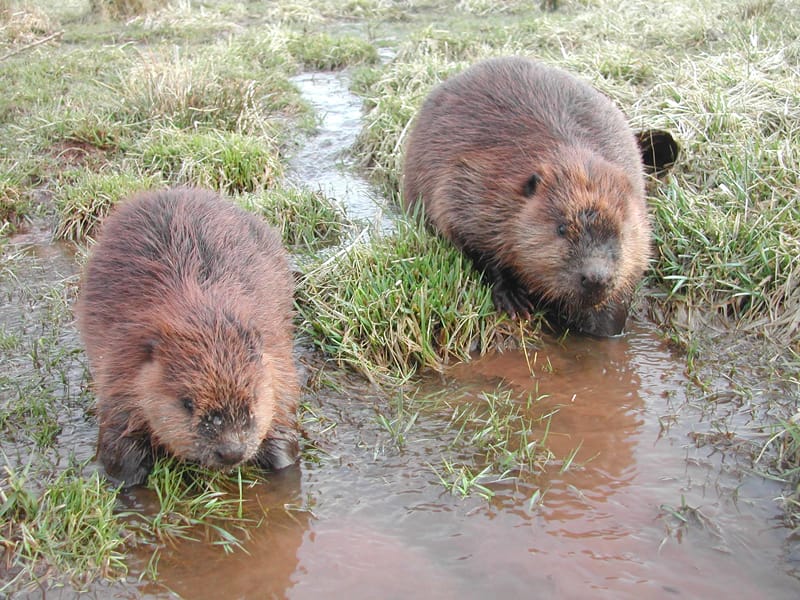
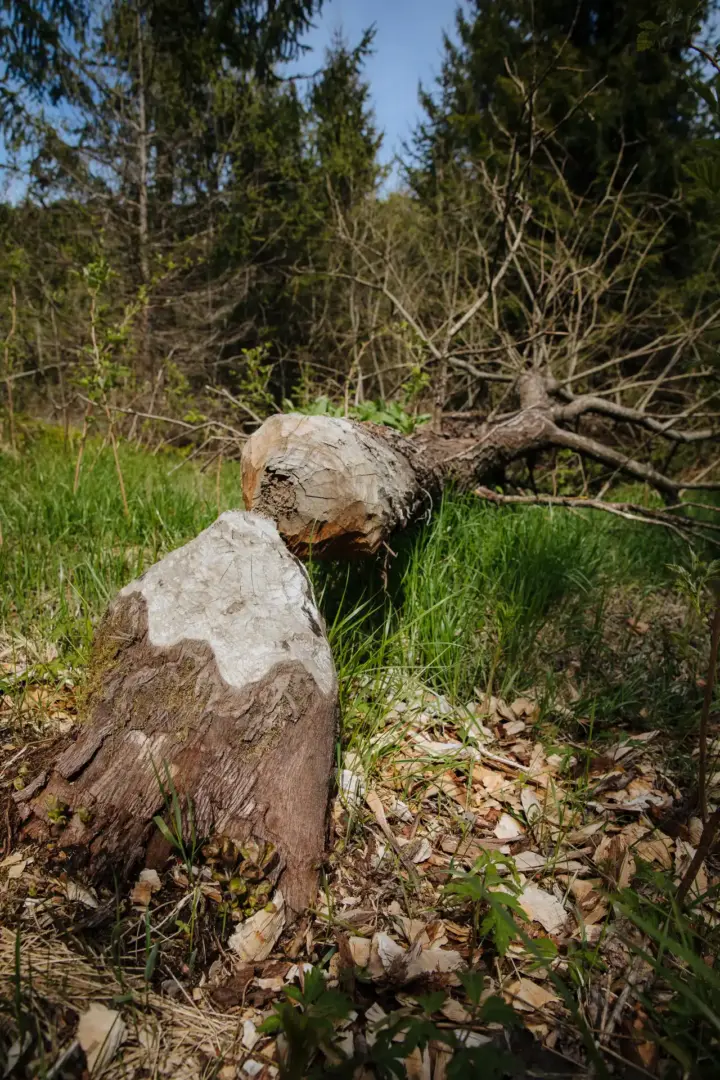
The European beaver is an amazing natural architect. Its colony lives nearby, in the upper reaches of the Irshava River, in the unique mountain marsh known as ‘Chorne Bagno’. This is a real source of pride for the park, as the presence of beavers at such an altitude is a rare and highly valuable ecological phenomenon.
Stay a little longer. Every mountain stream in the Zacharovanyi Krai is a living artery of the park. It is water that unites the forests, plants, animals and people into a single natural system, which is so important to preserve.