
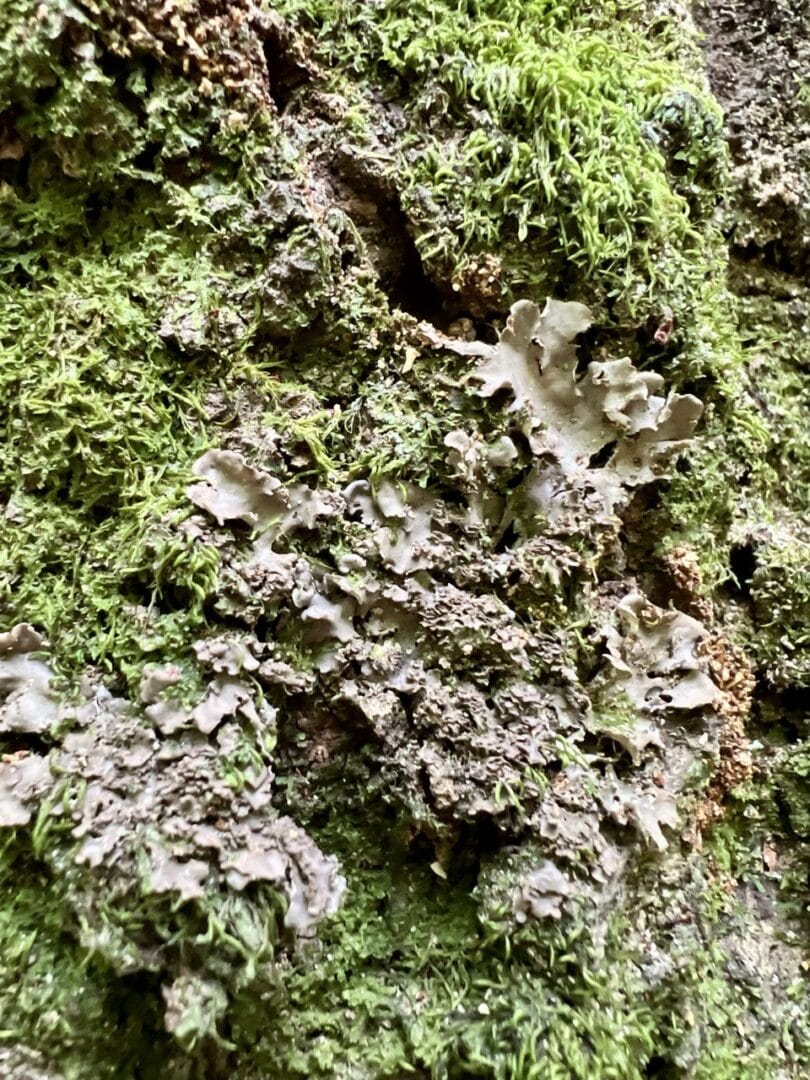
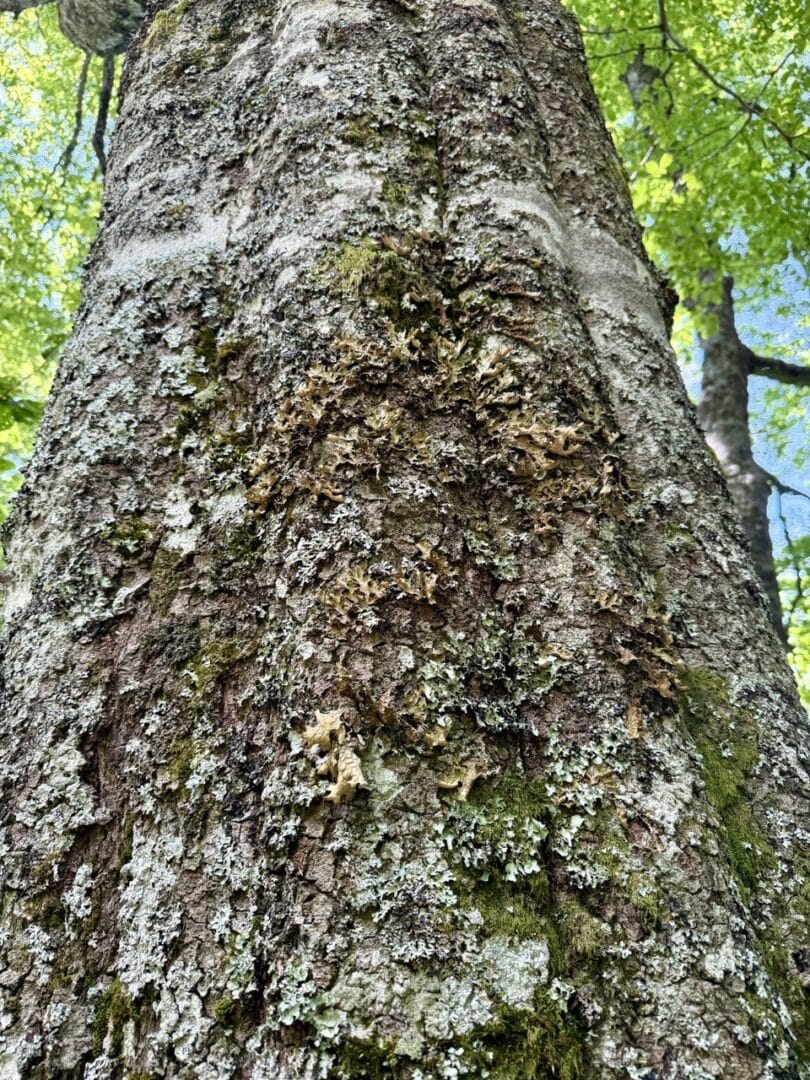
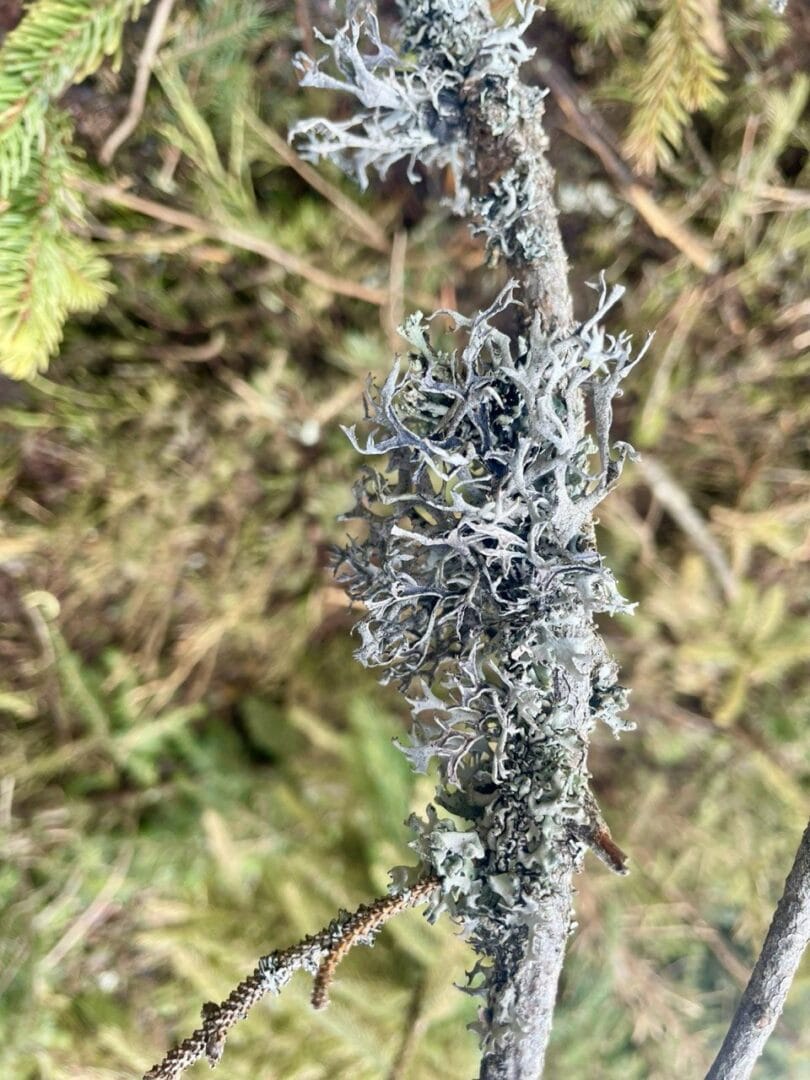
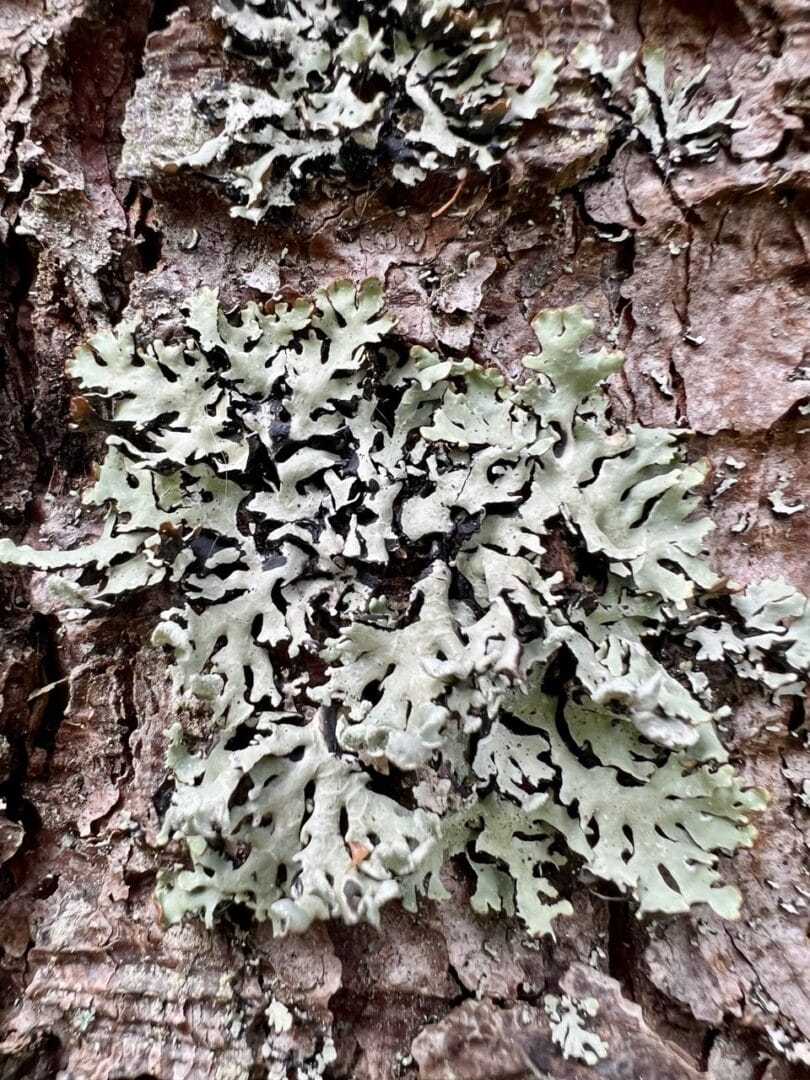
Take a look at the large boulders along the Sinyavka River. Can you see the grey, greenish, yellow and black patterns on the boulders? It’s neither paint nor moss. What you’re looking at are lichens, some of the oldest living organisms on Earth.
Lichens are an amazing symbiosis of a fungus and microscopic algae. They have no roots and obtain moisture and nutrients directly from the air and river spray. This is precisely why they are extremely sensitive to any pollution and serve as natural indicators of crystal-clear air. Today, there are around 2,200 species of lichens in Ukraine, and you can find nearly 300 of them here, in the Zacharovanyi Krai National Park.
Let’s compare how human activity affects these sensitive organisms. Up to 200 species of lichens coexist peacefully in our Park’s primeval forest. However, in areas with heavy tourist traffic, their numbers are significantly lower, ranging from just 30 to 70 species.
This ecological impact is even more pronounced in areas where active logging took place prior to the establishment of our national park in 2009. There, only a few species of lichen can now be found on the trees – very often no more than five. This unfortunate effect is directly linked to the consequences of intensive logging, which destroys the old habitat. It will now take many more decades of tranquillity for this vulnerable ecosystem to fully recover.
Take a closer look at these rock formations. The lichens you see before you are colonising volcanic rock. By secreting natural acids, they slowly break down the hard rock and create the first thin layer of soil, on which mosses, grasses and, in time, new trees eventually grow. During prolonged droughts, lichens can dry out completely, but after the very first rain they come back to life in just a few minutes!
Please take care of these tiny creators of nature. Do not step on rocks covered in lichens, and do not scrape them off. They grow extremely slowly: sometimes it takes nature between 10 and 50 years to form a patch no bigger than a coin.
Having enjoyed this living chronicle of the rock, continue your walk along the Synyavka River. Follow the route markers as you go, for the forest ahead has new, unspoiled discoveries in store for us.