
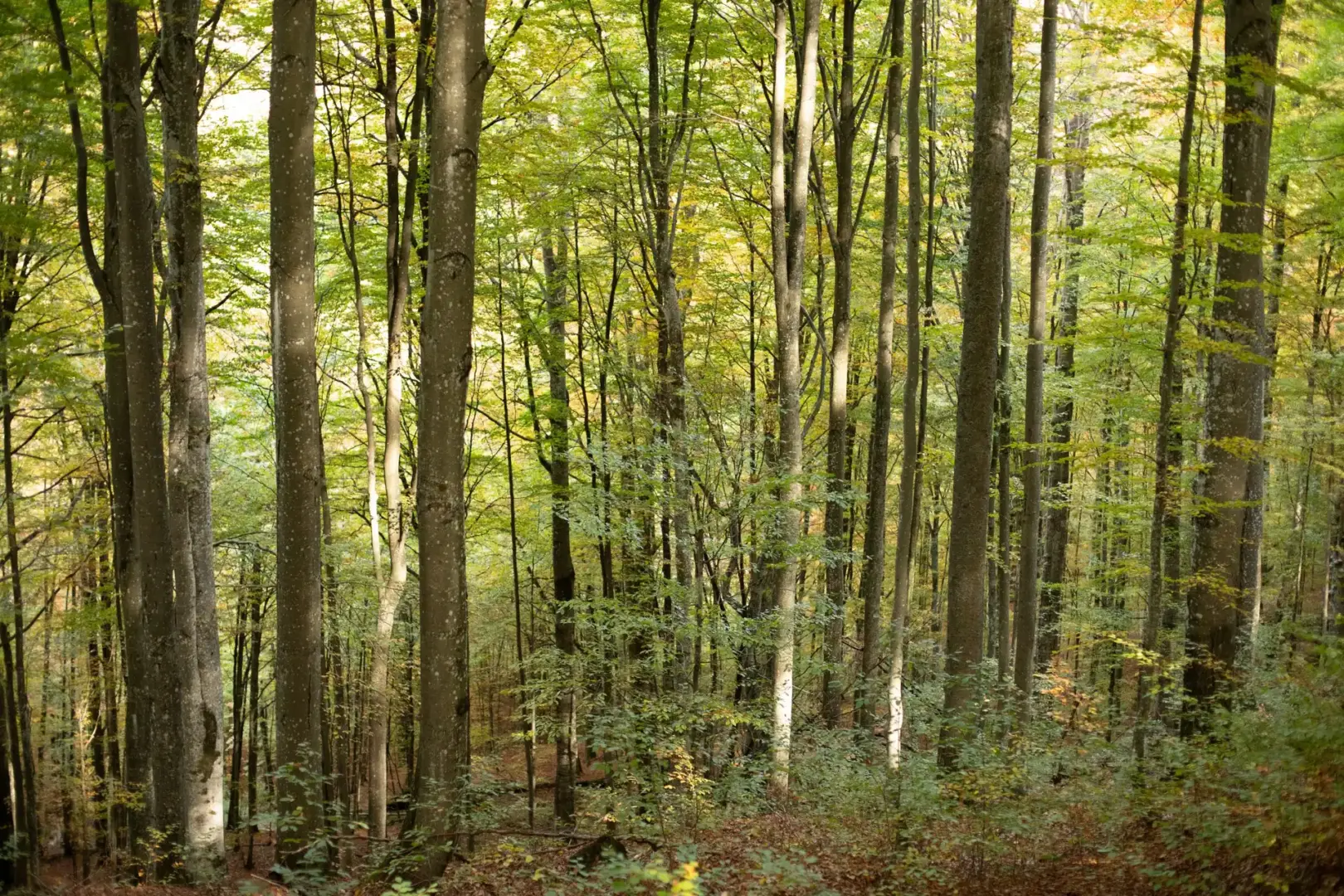
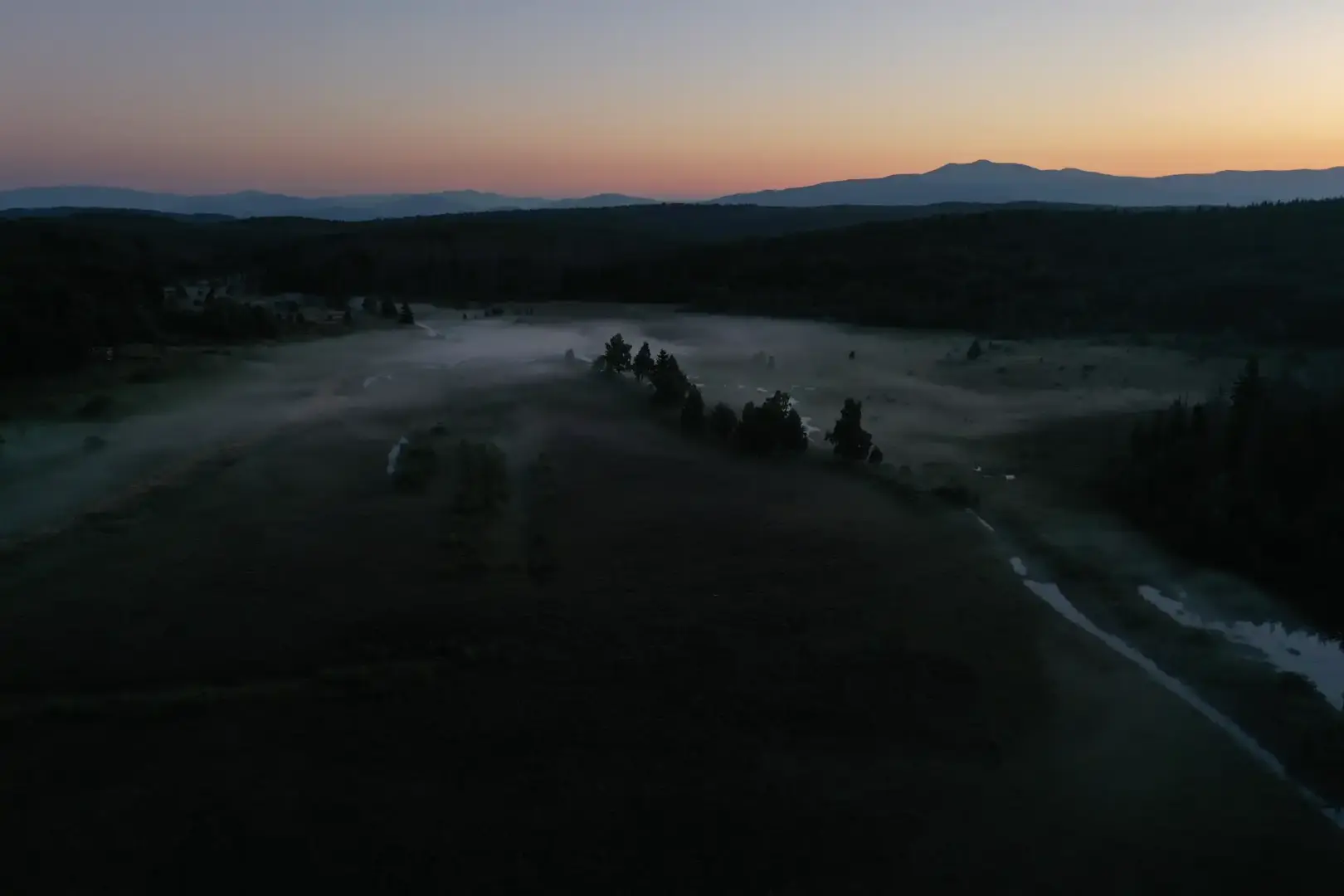
Look around you. You are standing in the midst of a young beech forest. It is constantly changing, growing and renewing itself. But very close by, in the protected part of the park, genuine primeval beech forests have been preserved – forests that have remained almost untouched by human hands. Today, these primeval forests remain hidden from most visitors. It is precisely because of this that they have been preserved almost exactly as they were hundreds of years ago.
This entire forest can be likened to a large, close-knit family. It is home to an incredible diversity of generations: tiny seeds are sprouting right beneath your feet, young saplings are reaching for the sun nearby, and towering above them are mature and very old ‘patriarch’ trees. And the larger the area of such a primeval forest, the stronger and more resilient this great family is in the face of any storms or diseases. Everyone here protects one another.
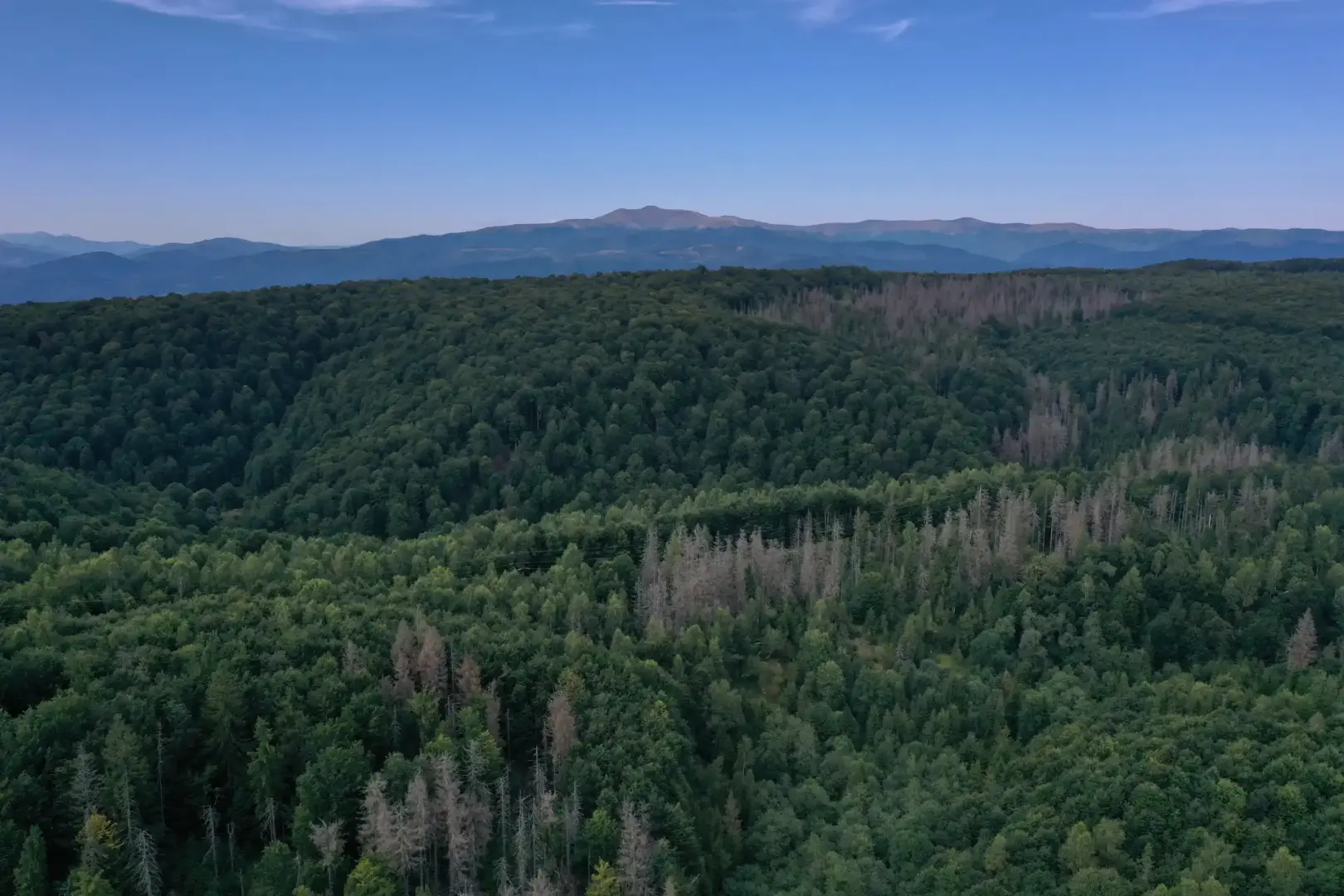
Artificial forests, created by humans, will never possess such strength. For example, in the vicinity of the unique ‘Chorne Bagno’ marsh, spruce trees were once artificially planted. Historically, they were not native to this area. Today we can see the consequences of this decision – these fir trees are dying off en masse, as artificial plantations lack the resilience that a wild forest has built up over millennia. However, humans no longer need to intervene with axes or new plantings. The best and only correct solution now is simply to wait – with time, nature will heal its own wounds and fully restore itself.
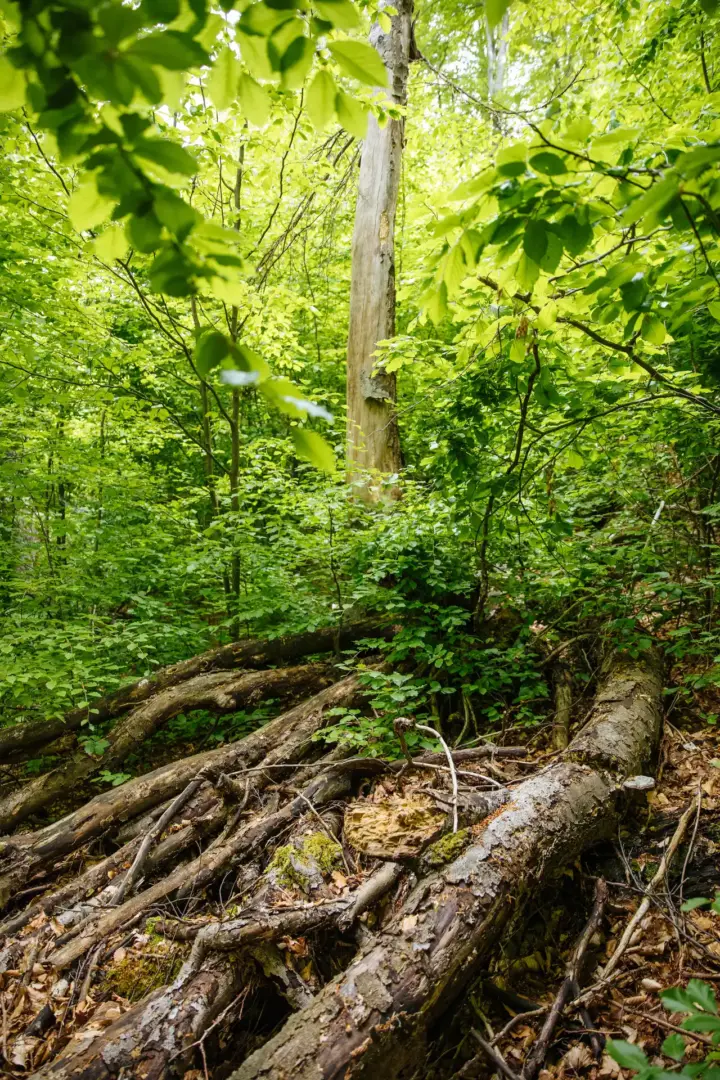
That is precisely why the local protected areas are so valuable. They are recognised as part of UNESCO’s World Natural Heritage. Our ‘Irshavka’ and ‘Velykyi Dil’ sites form part of the pan-European site ‘Primeval and Ancient Beech Forests of the Carpathians and Other Regions of Europe’. This places them on par with such world wonders as the Galápagos Islands or the Great Barrier Reef. In the primeval forest, trees grow, age and fall naturally. They help to preserve clean water, the richness of wildlife and the natural balance of the Carpathians. Even the dead wood of these primeval forests sustains many other species of flora and fauna.
Listen carefully… The rustling of the leaves, the birdsong and the scent of the beech forest are almost indistinguishable from those that prevailed here hundreds of years ago. Today, the young forest you see is gradually becoming part of a great natural history. And whether future generations will be able to see a true primeval forest depends on how we preserve it.
Having cleared our minds amongst this friendly beech family, let’s continue on our way. Follow the trail markings as you go. Ahead, we’ll discover the park’s next secret.